
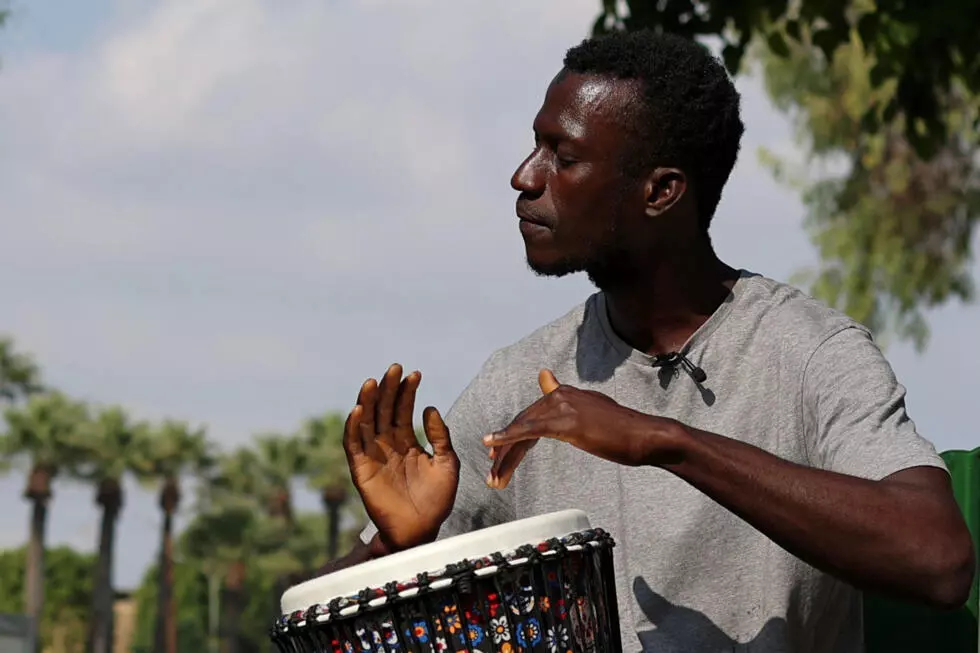
Ibrahim Kamara, a 29-year-old Gambian, arrived on the Mediterranean island five years ago. One morning, he saw a djembe in a shop, an African percussion instrument that immediately reminded him of his country of origin.
“Like me, he came from Brikama,” the second largest city in Gambia, the musician told AFP, adding that he was later given a similar instrument.
Playing the djembe was then “a breath of fresh air” for Ibrahim who, after arriving on the island, lived with about ten people in a tent in a park in Nicosia, sometimes in stifling heat.
“It was really difficult, we had no food” and “(we had to) queue to drink from a fountain,” he recalls.
In addition to the deprivations, he says he has suffered from racism in a country where nearly 5% of the 915,000 inhabitants are asylum seekers and where 1,500 applications are filed every month, according to the Cypriot government.
– “A shared humanity” –
“One day at the bank, while I was standing next to someone in a queue, that person moved away from me and put on a mask,” says Ibrahim, still waiting for a response to his asylum application.
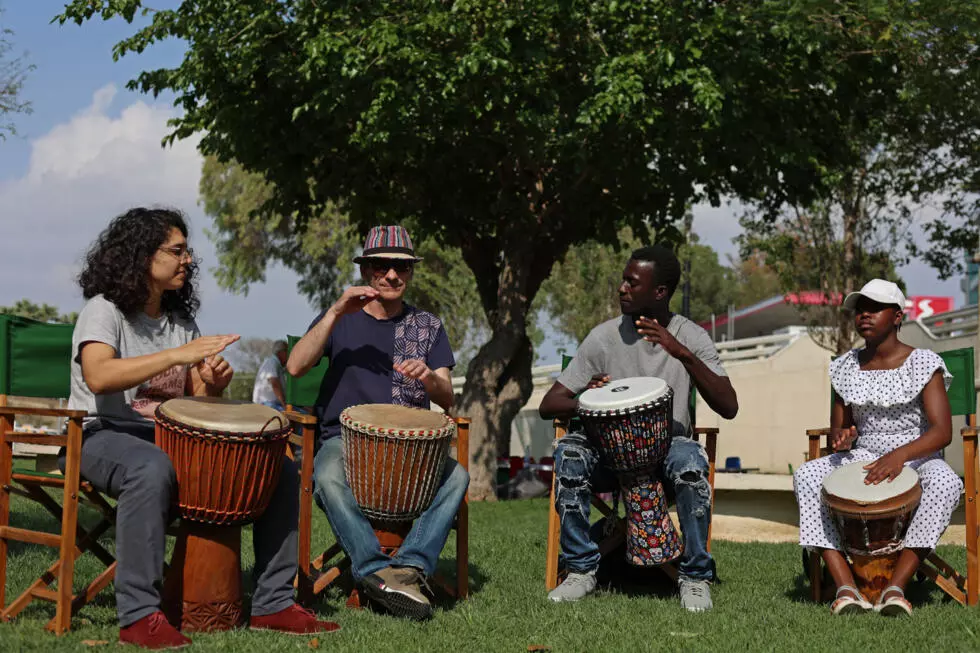
But little by little, he says he was able, “thanks to the drums, to create a bond” with the Cypriot population. Djembe means “to bring people together” in Bambara, a language widely used in West Africa, he likes to point out.
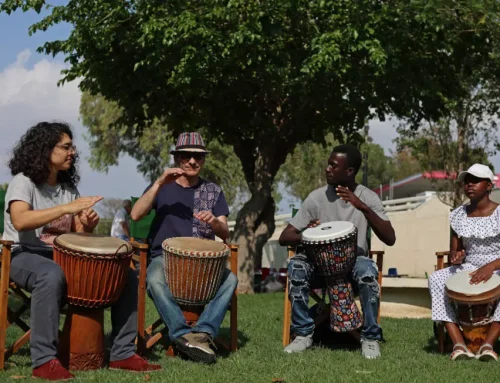
Today he runs music workshops every Monday after receiving support from the European association Project Phoenix, which has helped around ten undocumented people to integrate professionally on the island since 2018.
And without even realizing it, the income from these classes, combined with another small job, allowed him to find a “nice” three-room apartment to share.
But above all, these workshops allow Cypriots to discover his world.
“Our country needs to discover their African culture” in order to be able to better “welcome them,” says Panayiota Constanti, who joined the percussionist’s classes a year and a half ago, during a session in a park in Nicosia.
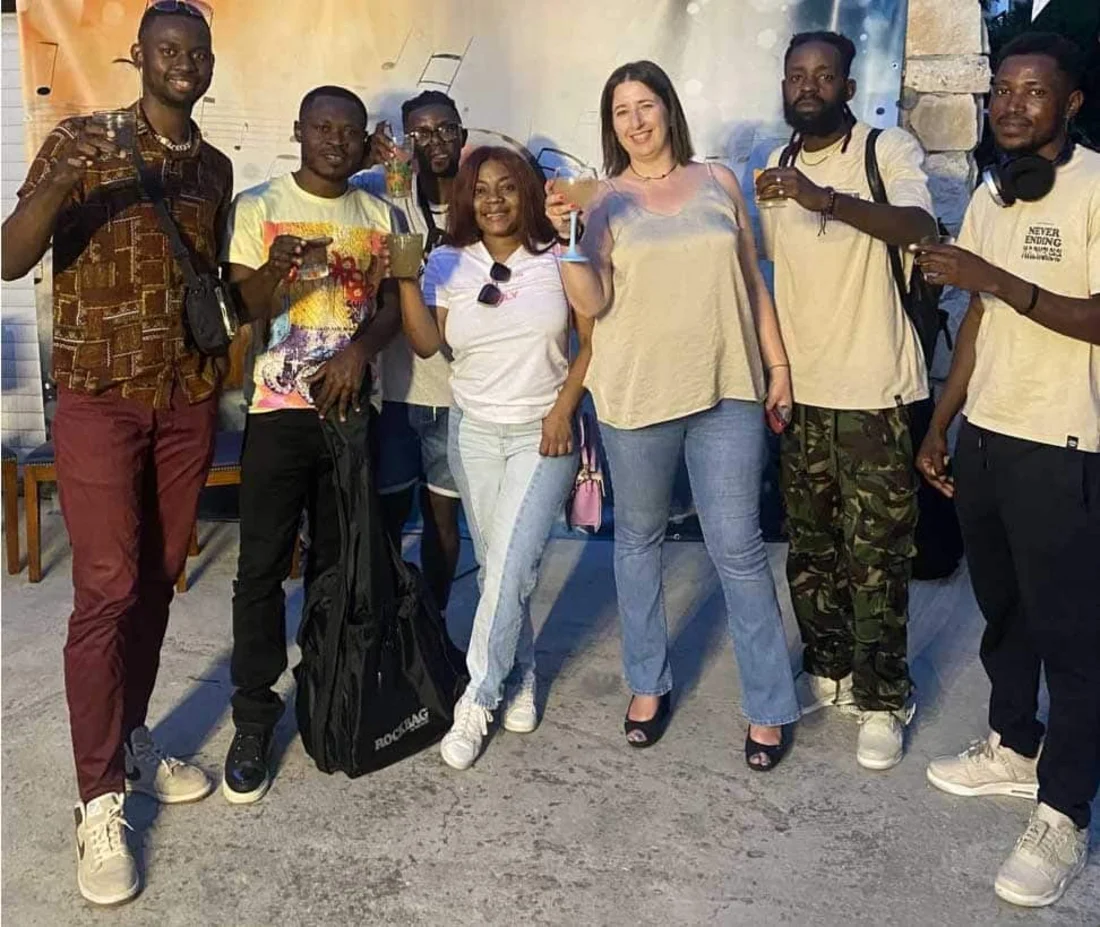
Like Ibrahim, Isaac Yossi, a Cameroonian who goes by the name “Big Yoss,” wanted to bring migrants and Cypriots together around a common project. Three years ago, he founded the music group Skyband.
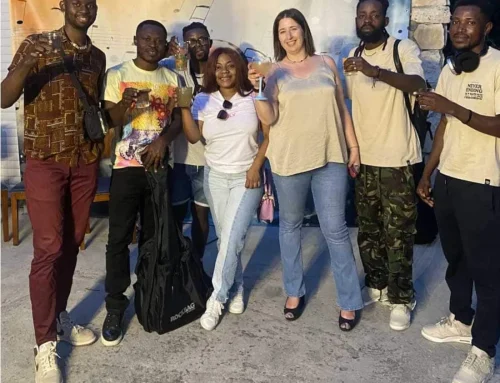
Along with six other African asylum seekers, they play in restaurants, at weddings or private Cypriot parties, fusing African rhythms and Greek music to pay homage to “a common humanity”.
– “Human beings” –
Initially skeptical, the Cypriots “change their perspective” when “I start singing in Greek,” says Isaac, acoustic guitar in hand, during a rehearsal, after playing “Tha Mai Edo” by the famous Greek singer Konstantinos Argiros.
To integrate, he learned Greek, the language spoken in the southern part of the island, which is administered by the Cypriot government, recognized by the UN. Turkish is the language used in the northern part, invaded by Turkey in 1974.
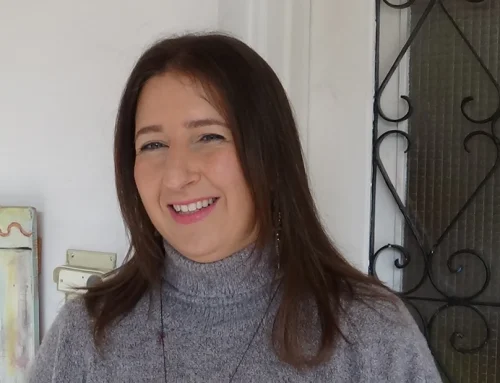
The island does not offer enough “opportunities” for migrants to showcase their talents, laments Maria Demosthenous, piano teacher and manager of Isaac’s band.
“When we think of migrants, we don’t imagine that they could entertain us or make good music,” says this 43-year-old Cypriot woman who campaigns for them to perform more on stage.
“We must see them as human beings, as the people they were before they became migrants.”









Leave A Comment